Two of the most common hot runner complaints sit at opposite ends of the same problem. Gate freeze-off happens when the gate is too cold and plastic solidifies in it. Stringing and drooling happen when the gate area is too hot and the melt keeps flowing or leaves a thread when the part opens.
Both come down to controlling temperature at the gate. This guide gives a practical checklist for diagnosing them, including the often overlooked nozzle tip insulator.
What is gate freeze-off?
Gate freeze-off is when the plastic in the gate solidifies before or between shots. It can cause short shots, blocked gates, cold slugs and inconsistent filling.
Common causes of gate freeze-off
- Gate area too cold because heat is lost to the cooled mould steel
- Nozzle tip temperature set too low for the resin
- Worn, cracked or missing nozzle tip insulator
- Poor contact or fit between the nozzle tip and gate
- Cooling channels too close to the gate
- Cycle conditions that leave the melt standing too long
What are stringing and drooling?
Stringing is a thin thread of plastic that trails from the gate when the mould opens. Drooling is plastic leaking from the gate between shots. Both leave gate vestige defects and can contaminate the mould face.
Common causes of stringing and drooling
- Gate or nozzle tip temperature too high for the resin
- Excess heat build-up because the tip is not thermally controlled
- Insufficient decompression or suck-back
- Uneven temperature across cavities
- Worn gate or tip geometry
A practical troubleshooting checklist
- Confirm the resin supplier’s recommended melt and tip temperatures.
- Compare gate temperatures across cavities to find outliers.
- Inspect the nozzle tip and the insulator for cracks, wear and deformation.
- Check the fit between the nozzle tip, insulator and gate steel.
- Check the cooling layout and flow near the gate.
- Adjust temperature in small steps and record the effect.
- If the problem remains on one cavity, swap parts between cavities to isolate the cause.
Always follow your hot runner manufacturer’s guidance. These steps are general good practice and not a substitute for it.
How the nozzle tip insulator helps
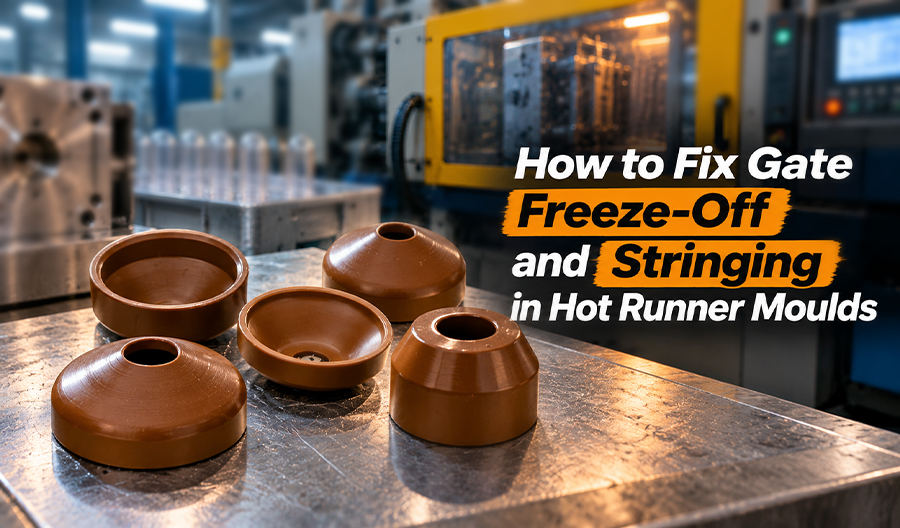
The insulator limits heat flow between the nozzle tip and the cooled gate steel. When it is in good condition and correctly fitted, the gate temperature is steadier, which helps reduce both freeze-off and stringing. When it is worn, you may be fighting symptoms with temperature changes that do not last.
When to replace instead of adjust
If an insulator shows cracks, wear or a loose fit, replacing it is usually quicker than repeated process tuning. Keep a few spare insulators for each mould type to avoid long downtime.
Frequently asked questions
What causes gate freeze-off in a hot runner?
Usually a gate that is too cold, often from heat loss to the cooled steel, low tip temperature or a worn insulator.
How do I stop stringing at the gate?
Check tip temperature, decompression and the condition of the nozzle tip insulator, and compare cavities for uneven temperature.
Can the insulator alone fix the problem?
Not always. It is one factor, so review the whole gate area.
Do you supply replacement insulators?
Yes. We machine polyimide insulators to your drawing or sample.
Call to action
Fighting gate problems on your moulds? Send us your insulator drawing or a worn sample to mail@polymatindia.net. We machine replacements in Mumbai.